

Table of Contents
Brand Architecture is a system that organizes brands, products, and services to help customers access and relate to a brand. It helps structure a brand portfolio so that customers can easily tell which brands are affiliated and at what level. This helps explain the breadth and depth of your products or services in the way you want consumers to see them.
An established Brand Architecture is an important guide for brand extensions, sub-brands, and development of new products. It provides a road map for brand identity development and design, and reminds consumers of the value proposition for the entire brand family. In doing so, it provides the maximum brand value by fully leveraging both corporate and sub-brands.
Like most marketing topics, I could write a book on this. As such, I’ve left out some nuance, but I’ve tried to provide enough information to be a useful jumping off point.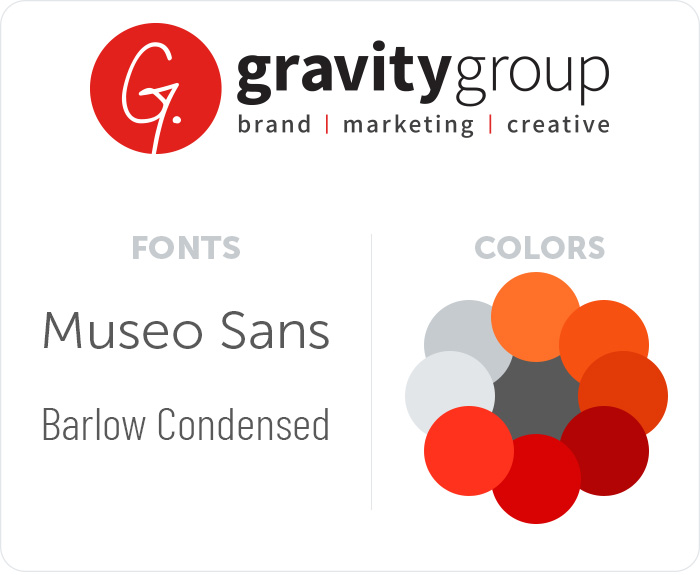
Here are some short definitions for key concepts to get us started:
Brand Identity: Relates to the logos and primarily visual materials that identifies a brand and distinguishes its products or services from competitors. For example, on the right you can see Gravity Group’s brand identity, including our logo, fonts, and colors used to distinguish our brand. Read our blog post on Brand versus Brand Identity to better understand the difference between the two.
Master Brand: A top-level corporate brand that encapsulates other branded products and services. A master brand can also be referred to as a parent brand, parent company, corporate brand, umbrella brand, or main brand.
Brand Extension: A product or service launched by a known brand name, where the extension is in a different category than the brand’s other products or services. These extensions may benefit from the brand equity affiliated with the existing brand name, depending on the Brand Architecture. Brand extensions are also known as sub-brands or in some instances, sister brands or endorsed brands.
The Four Most Common Types of Brand Architecture
Branded House
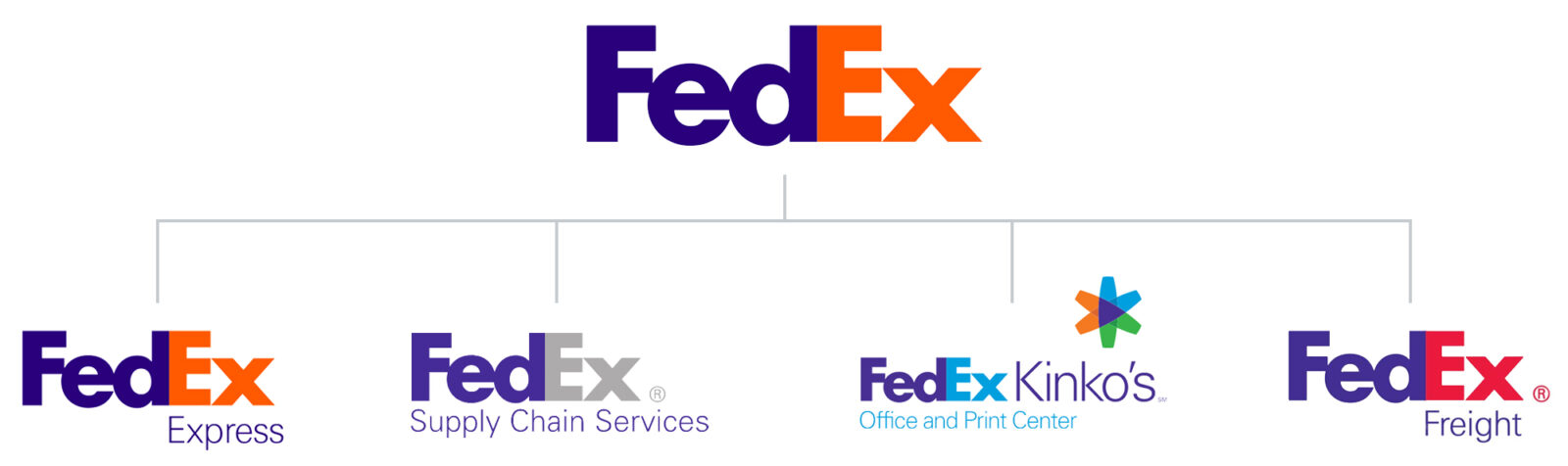
A branded house offers a very logical path to brand extensions and new brands. In a branded house, the master brand is always present and is easily linked to and leveraged by its extensions. A good example is FedEx. FedEx Kinko’s provides very different (but complimentary) services than its master brand, FedEx. It is easily linked back to FedEx, and therefore shares brand equity. A branded house can be spotted when brands have the same brand identity, such as the iconic FedEx logo.
In this case, a successful Brand Architecture enables customers to form opinions and preferences for an entire family of brands by interacting with or learning about an individual brand in that family.
Other Examples
- Apple: While Apple offers a wide variety of products, each extension is easily linked to Apple by its logo. Its brand extensions clearly benefit from the master brand’s equity and influence in the market.
- Virgin: Virgin provides many products and services in very different categories, such as Virgin Mobile, Virgin Hotels, and Virgin Orbit. Yet, all of their extensions’ branding shows the unique red “Virgin” logo.
Benefits of a Branded House Architecture
- The master brand doesn’t have to spend time and money differentiating each sub-brand’s strategy. Although the target markets might differ, the overall brand identity remains consistent.
- Sub-brands fully benefit from the reputation of its master brand, and sub-brands help build brand equity for the master brand.
- Master brands can better target their communication with consumers by addressing specific and unique pain points through the niche sub-brands.
House of Brands
A house of brands insulates and protects the master brand from brand extensions and in turn protects the different brands from each other. A house of brands also allows for a master brand to have competing brands in the same segments. A good example is Proctor and Gamble (P&G) as the master brand. If Crest, one of P&G’s sub-brands, had some kind of brand crisis, none of the other brands would be affected. Likewise, when a sub-brand gains favorable publicity, the other brands don’t benefit from it.
Other Examples
- General Motors (GM): While P&G’s brand extensions spread across various industries, General Motors is the master brand of different car manufacturers and products related to cars. Some of GM’s sub-brands include Chevrolet, GMC, Cadillac, Buick, and OnStar. While the products are closely related, GM does not influence each extension’s brand identity.
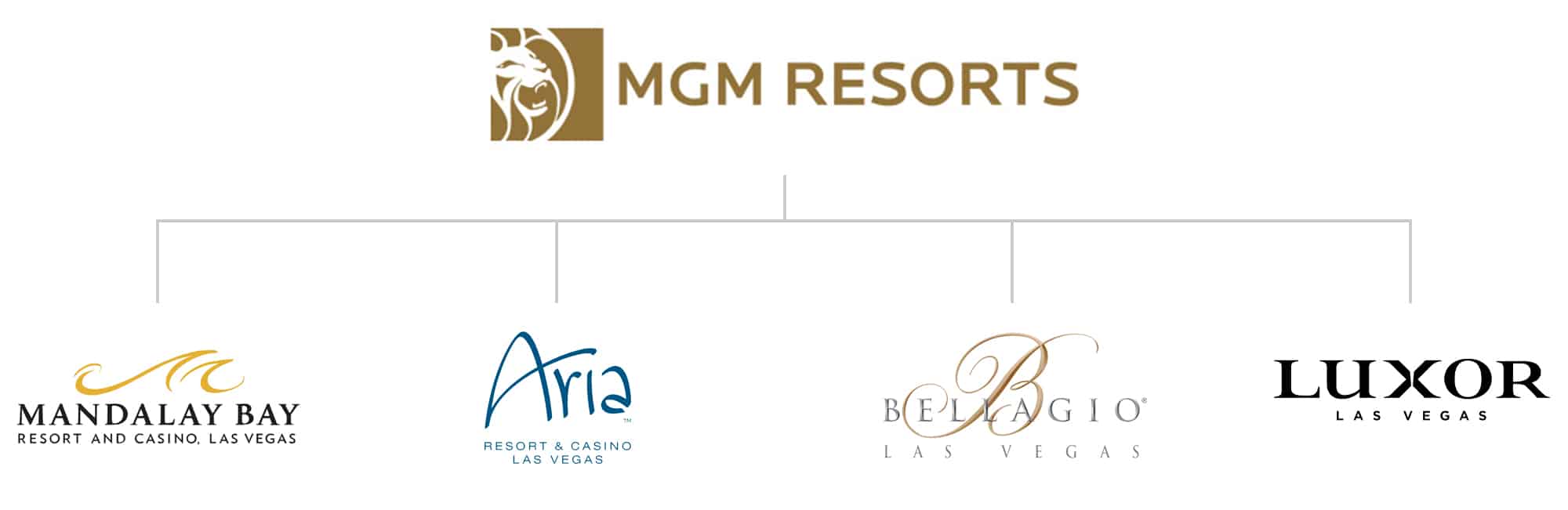
- MGM Resorts International: With 30+ brands in its portfolio, MGM Resorts houses some of the most well known resorts, casinos, and restaurants around the world. Each sub-brand, such as the Bellagio or Mandalay Bay resort, has a clearly unique brand identity, but are still related through their master brand. “Each one of our resorts has a persona,” states Sarah Moore, Senior Vice President of Marketing at MGM Resorts International, on our Brand Story Podcast.
Benefits of a House of Brands Architecture
- Individual brands can compete under a master brand.
- Negative publicity doesn’t necessarily harm the other brands or the master brand.
- The master brand provides resources to the sub-brands.
Endorsed Brands
An endorsed brand is a more flexible way to package brands under a master brand. Each brand extension is given a separate identity and is associated with the master brand, or not, depending on the context. This gives a brand extension the freedom to have an independent brand strategy and target market, but to also use the brand equity of the parent brand when it’s convenient.
Endorsed brands fall in between a branded house and a house of brands architecture. The way a sub-brand retains the reputation of the parent brand and the sister brands affecting each other relates it to a branded house. For instance, negative publicity surrounding one sister brand could potentially negatively impact another sister brand, and even the parent brand as a whole. Yet, the independent market segments and branding make it similar to a house of brands.
Examples
- Toyota: While Toyota produces its own cars under the Toyota name, it is also the master brand of Lexus and Scion brands.
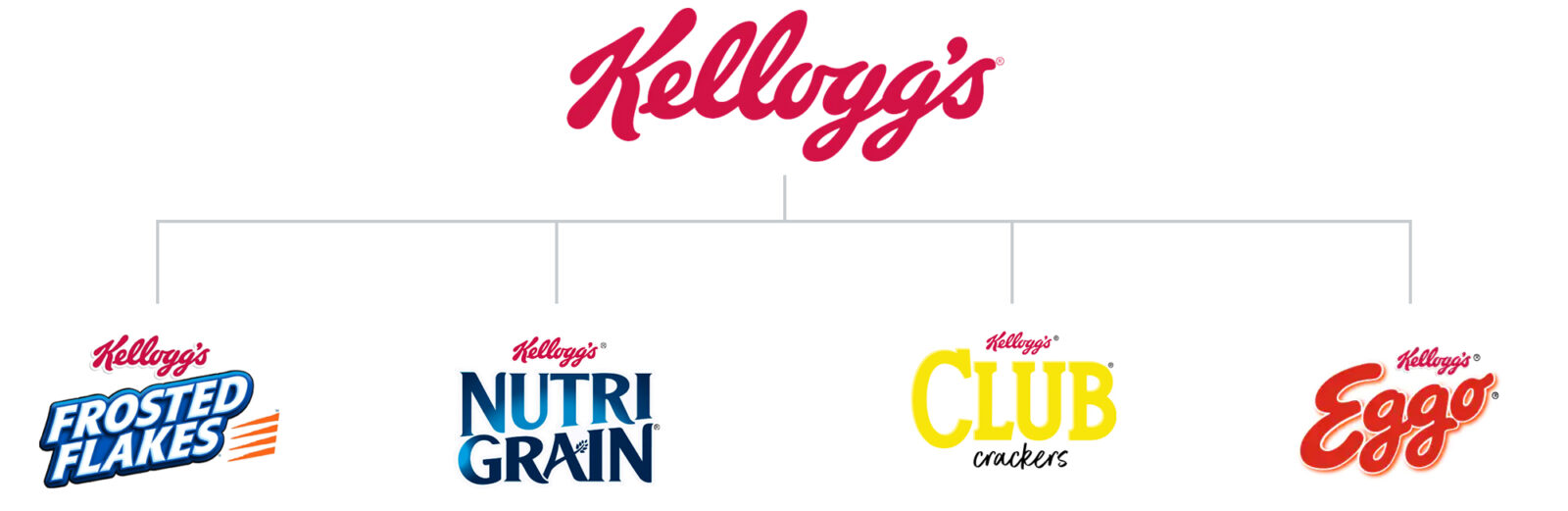
- Kellogg’s: Kellogg’s owns many brands with their own brand identities, but you can easily find their logo on all of their sub-brands’ packaging, with some brands even having Kellogg’s in the name, such as “Kellogg’s Rice Krispies.”
Benefits of an Endorsed Brand Architecture
- The options of independence and/or beneficial relations with the master brand.
- The sub-brand doesn’t have to be built from the ground up.
- Marketing the endorsed brands can be easier when using similar brand identities.
Hybrid Brands
A hybrid brand architecture is a combination of two or more brand architectures. Oftentimes, it is seen as a compromise and happens when a master brand begins creating and acquiring new brand extensions. If both the master brand and its new sub-brand sell well-known products or services, it’s unideal to force them to adopt new brand identities. In this situation, the master brand may have relations with some sub-brands, but no relations with others.
Although it might be the best option for some brands, a hybrid brand is not always ideal since different brand identities and extensions can be difficult for customers, marketers, and investors to keep track of.
Examples
- The Coca Cola Company: Coca Cola offers products with its name such as Diet Coke, Coke Zero, etc., but is also the parent company of Sprite, Fanta, Minute Maid, and Dasani water.
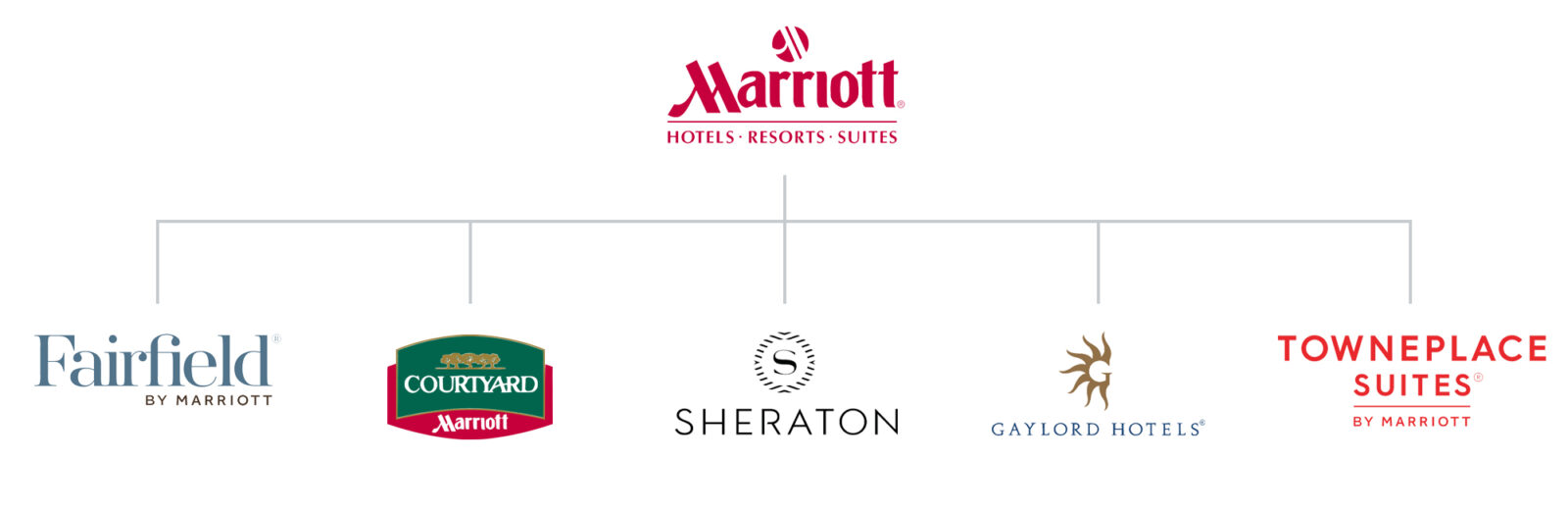
- Marriott: Marriott as the master brand includes several hotel lines with the same brand identity, hotel lines with the Marriott name but slightly different brand identities, and hotels with none of Marriott’s brand identity.
Benefits of a Hybrid Brand Architecture
- Master brands can continue to expand while keeping their own brand identity.
- Sub-brands acquired by master brands gain resources while potentially keeping their brand identity and brand equity, or gaining those of the master brand.
- It gives master brands and sub brands the option to have the best of both worlds in a merger or acquisition.
Why Every Brand Needs a Clear Brand Architecture
- Clarity: A clear Brand Architecture helps consumers understand why brands are connected the way they are. It also enables employees and investors to understand and implement strategies that will drive the most success.
- Cross-Selling: By clearly defining the relation of different brands under one master brand, consumers can find products/services to fulfill a variety of their needs.
- Brand Equity: Brand equity describes the perceived value of a brand. With a clear Brand Architecture in place, many master brands have the opportunity to share their brand equity with their well-known sub-brands. If a consumer sees a parent brand as favorable, they will see extensions of that brand favorable as well, as long as there is a clear relation. For a more in-depth understanding of brand equity, check out this post from The Branding Journal.
Deciding the right Brand Architecture strategy takes an extensive amount of research, and an in-depth understanding of your position, offerings, and brand strategy. Knowing what Brand Architecture you want to pursue will help your business scale successfully.
We provide branding services that’ll take your business to the next level. Check out our Branding Services or contact us to learn how we can help!